More About:
The Greenhouse Gas Problem
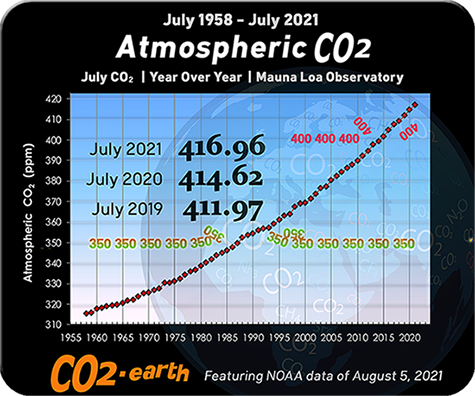
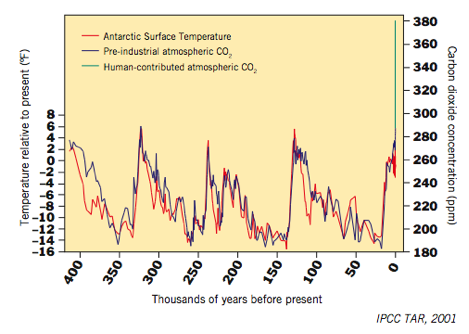
The Biosphere is a fragile and complex system which has made 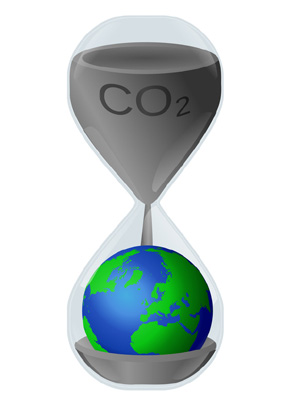 it challenging for scientists to draw conclusive results until recently. Nevertheless, careful analysis of independently corroborated data reveals a striking difference between manmade and natural climate change namely the rate of oscillation. Furthermore, there is no precedence from the past 2.3 million years that carbon dioxide (CO2) ever exceeded a concentration of 300 ppm. Now we are at 400 ppm! One of the critical parameters that regulate the equilibrium of the Earth’s climate and biomass is the carbon cycle. It entails the conversion of carbon from the inorganic states to organic states and organic states back to inorganic states. A key player of the carbon cycle is carbon dioxide (CO2), an atmospheric gas that is known as a greenhouse gas. Data from ice cores reveals that CO2 has remained in equilibrium for the last 2.1 million years with fluctuations between 200 and 300 parts per million (ppm) that take place between glacial and interglacial periods with transitions that lasted THOUSANDS of years while the current flux is occurring in decades! A strong correlation between an increase of atmospheric CO2 and increasing temperatures (see fig below) exists, however a causal relationship is not established and hence many critiques remain unconvinced that global warming is manmade. However, careful analysis of the data reveals that increase in temperatures followed an increase in atmospheric CO2 concentrations and hence leading to the conclusion that increased atmospheric CO2 is responsible for global warming. Recent anthropogenic intervention of the carbon cycle has disrupted the natural equilibrium and as most recent data indicate has lead to a 38% (250-400 ppm) increase in atmospheric CO2 (see figure bellow). It should be noted that in the last 25 years CO2 has increased by more than 50 ppm! If nothing changes we will reach an atmospheric CO2 concentration of 600 ppm by the end of the century which would have dire consequences for our global climate.
Most living organisms except plants consume oxygen and give off carbon dioxide (CO2) as a respiratory product. Plants, soil and the oceans act as natural CO2 sinks through production of biomass and calcification. Therefore a natural balance exists between CO2 producing and sequestering organisms. Modern human civilization has been intervening with the carbon cycle directly in two ways: combustion of fossil fuels and the destruction of natural carbon sinks. Global CO2 production is related to many domains of modern civilization: Energy production constitutes 30% of the global CO2 emissions, Industrial processes 21%, Transportation 19%, Fossil fuel retrieval, processing and distribution, produces 8% of the global CO2 emissions. 22% of the global CO2 emissions are created by construction from which 8% is attributed to cement production. Other greenhouse gases include methane and nitrous oxide that contribute up to 20% of the global greenhouse gases from anthropogenic sources. Destruction of Natural carbon sinks is another reason for increasing CO2 levels encompassing deforestation, destruction of wetlands, urbanization and ocean acidification reduce the natural sequestration capacity of the biosphere.
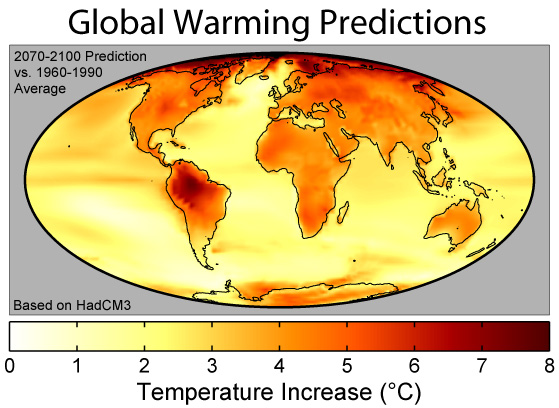
The eminent threat to our biosphere lies within the so called positive feedback mechanisms inherent to global warming which could cause runaway climate change that cannot be encountered. With increasing temperatures more and more greenhouse gases will be released into the atmosphere that are currently bound in a solid state. Several types of these feed forward mechanisms have been described, as a result of increasing atmospheric CO2 the oceans will dissolve more CO2 in form of carbonic acid which in turn will lead to acidification of the oceans that for one slows down or stops the natural calcification process and for another releases CO2 from magnesium and calcium carbonates that have previously bound CO2. Furthermore, warmer and more acidic oceans can absorb less atmospheric CO2 which further accelerates the atmospheric increase of CO2! In short this can lead to a disruption of the oceanic carbon sink. A further implication of global warming is thawing of permafrost and tundra that have in store huge amounts of methane in forms of methane hydrates. Methane is a 35 times stronger greenhouse gas compared to CO2! All ready data indicates 100 fold increase of methane gas release over Siberia and this process has just begun. Additionally, with greater temperatures water vapor in the atmosphere will become more abundant which in its net effect will accelerate the rate of global warming. Furthermore, melting of glaciers will absorb more sunlight and further enhance the warming effects. In summary with increasing global temperatures natural greenhouse gas sinks will be depleted accelerating the overall process of climate change. The data speaks for itself. There is truly no more time to waste. It is predicted that as a loss of biological carbon sinks will result in a reduction of atmospheric oxygen in the coming years. We have to start implementing drastic measures to reduce CO2 emissions.
The Solution
We have to minimize our carbon footprint by changing our lifestyles and implementing sustainable measures from small things in our daily lives to more substantial measures that can provide a neutral carbon footprint. A recent study has concluded that it is necessary to stop extracting fossil fuel by 2030. It is essential to phase out fossil fuel use and transition as soon as possible to renewable energies. Fly only if you have too! Eat less meat! Plant trees! Join Green New World! Green New World is currently building the first house intended to capture atmospheric carbon dioxide and convert it to soil. For more information please visit http://www.GreenNewWorld.org/HouseOfPeace.html
References